
How It Works
How Air Freight Works: From Booking to Delivery
5 min read
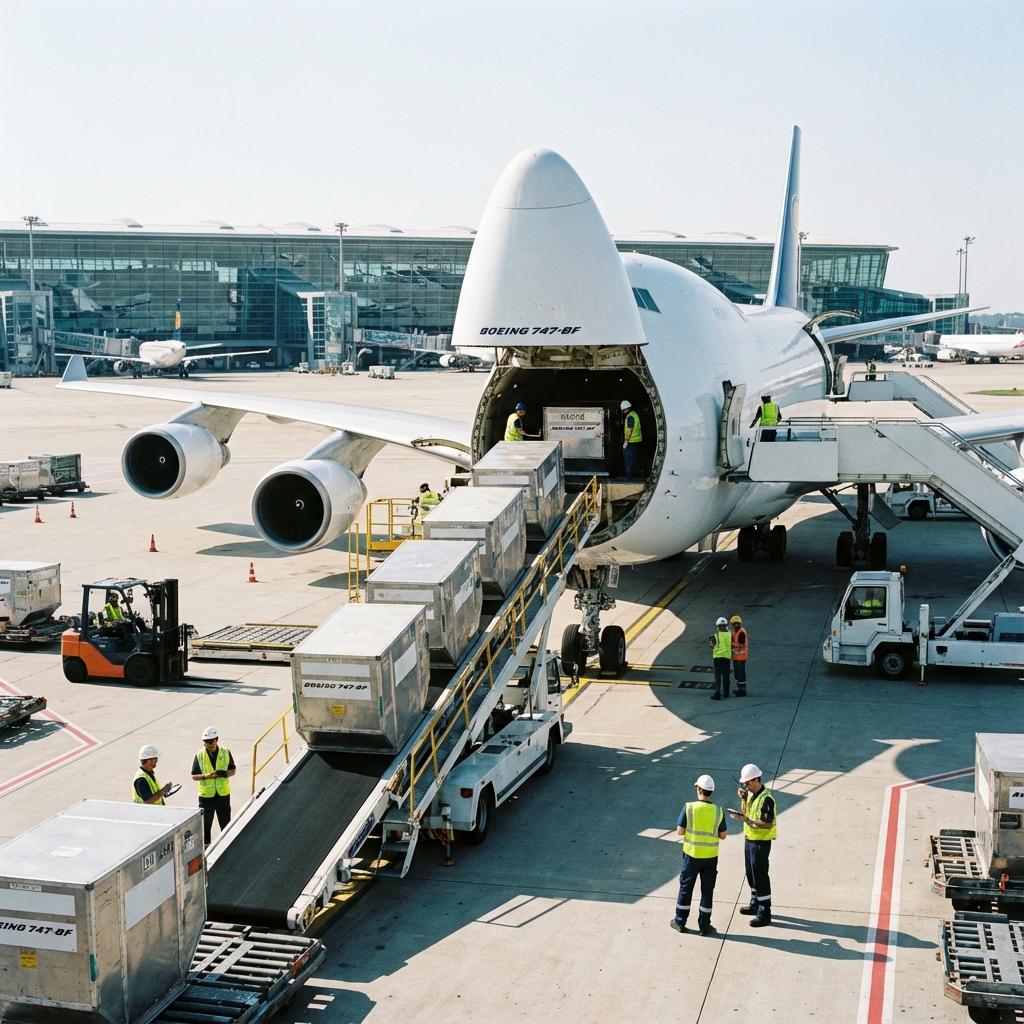
Air freight is the fastest way to move cargo internationally and is used for urgent, high-value or perishable goods. It costs more than ocean freight but offers speed and reliability.
The air freight process
- Booking: the forwarder reserves space on a flight.
- Documentation: an Air Waybill is issued for the shipment.
- Airport handling: cargo is screened, built onto units and loaded.
- Flight and arrival: the cargo flies, often via a hub, and is broken down on arrival.
- Clearance and delivery: customs clears the goods for final delivery.
Chargeable weight
Air freight is priced on chargeable weight, the greater of actual weight and volumetric weight. Volumetric weight is length x width x height in centimetres divided by 6000, so bulky-but-light cargo can cost more than its scale weight suggests.
When to choose air
Air freight suits time-critical shipments, high-value goods where speed reduces risk, and perishables. For large, heavy or low-value cargo, ocean freight is usually far more economical.