
Rail Freight
Double-Stack Container Trains Explained
3 min read
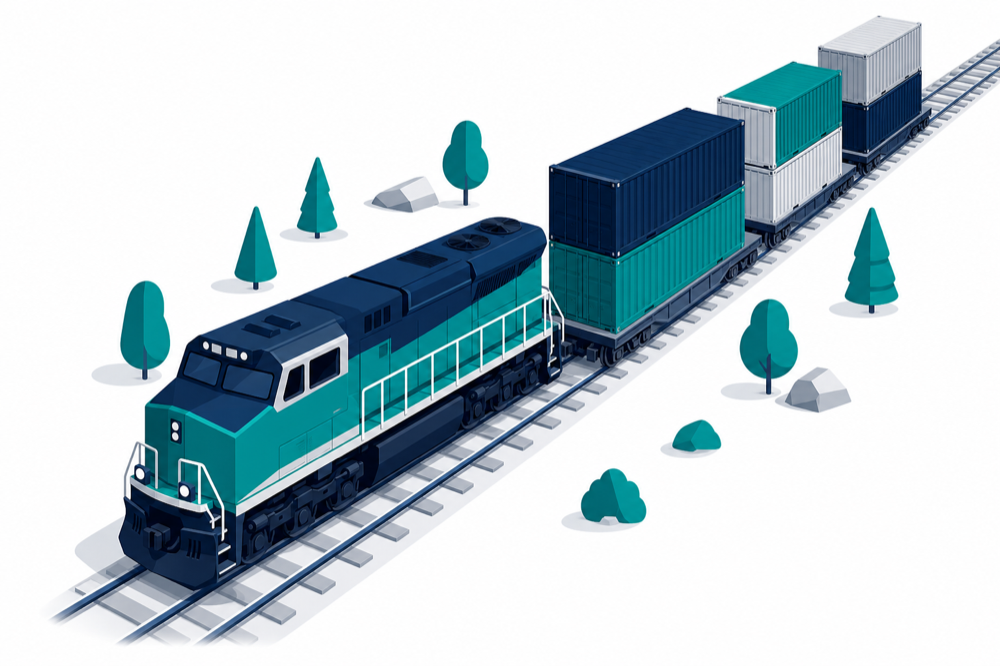
Double-stacking means carrying containers two high on a single rail wagon. It dramatically increases how much a train can move and lowers the cost per container on routes that support it.
How double-stacking works
Two containers are stacked on each wagon instead of one, roughly doubling the cargo a train carries without adding length. This raises capacity and improves the economics of every trip.
Where it is possible
Double-stacking needs enough vertical clearance under bridges, tunnels and overhead structures. Routes and corridors built or upgraded for it, such as electrified freight corridors with sufficient clearance, can run double-stack services, while older lines may not.