
Domestic Logistics
Domestic Logistics in India: An Overview
5 min read
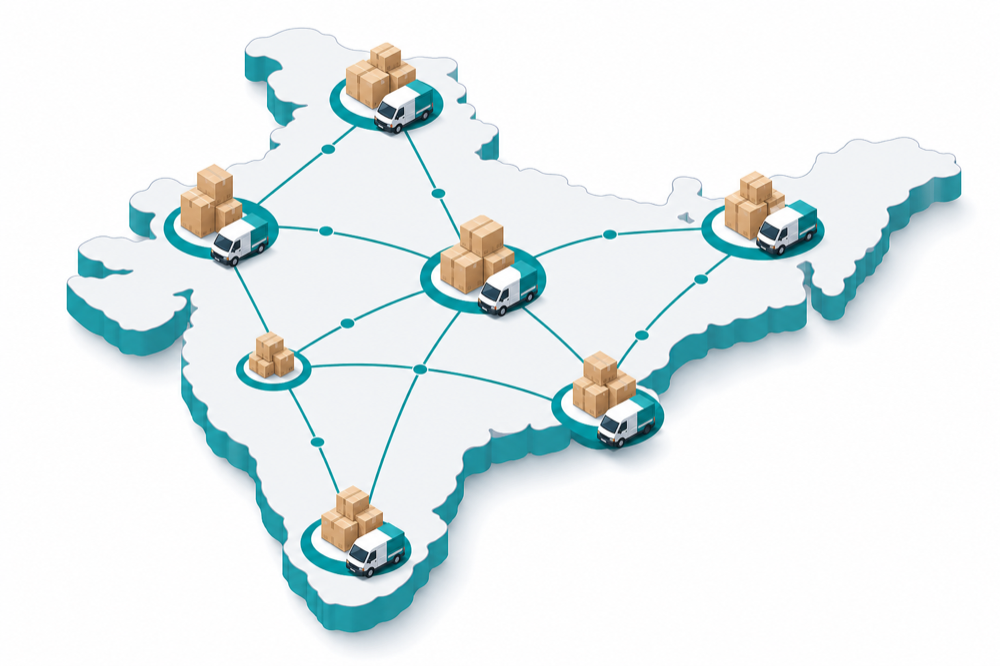
Domestic logistics is the movement of goods within India, from raw materials to finished products reaching customers. It blends road, rail, air and coastal transport into networks that connect factories, warehouses and markets.
The mix of modes
- Road: the dominant mode, reaching almost every destination door to door.
- Rail: cost-effective for long-distance and bulk movement.
- Air: fast domestic cargo for urgent and high-value goods.
- Coastal and inland waterways: efficient for bulk along coasts and rivers.
How goods move
Most domestic supply chains use a hub-and-spoke design: cargo is consolidated at regional hubs, moved between hubs by road or rail, then distributed locally. Warehousing and the GST e-way bill system tie these movements together.
Common challenges
- Long distances and varied infrastructure across regions.
- Balancing cost, speed and reliability across modes.
- Compliance such as e-way bills for inter-state movement.